
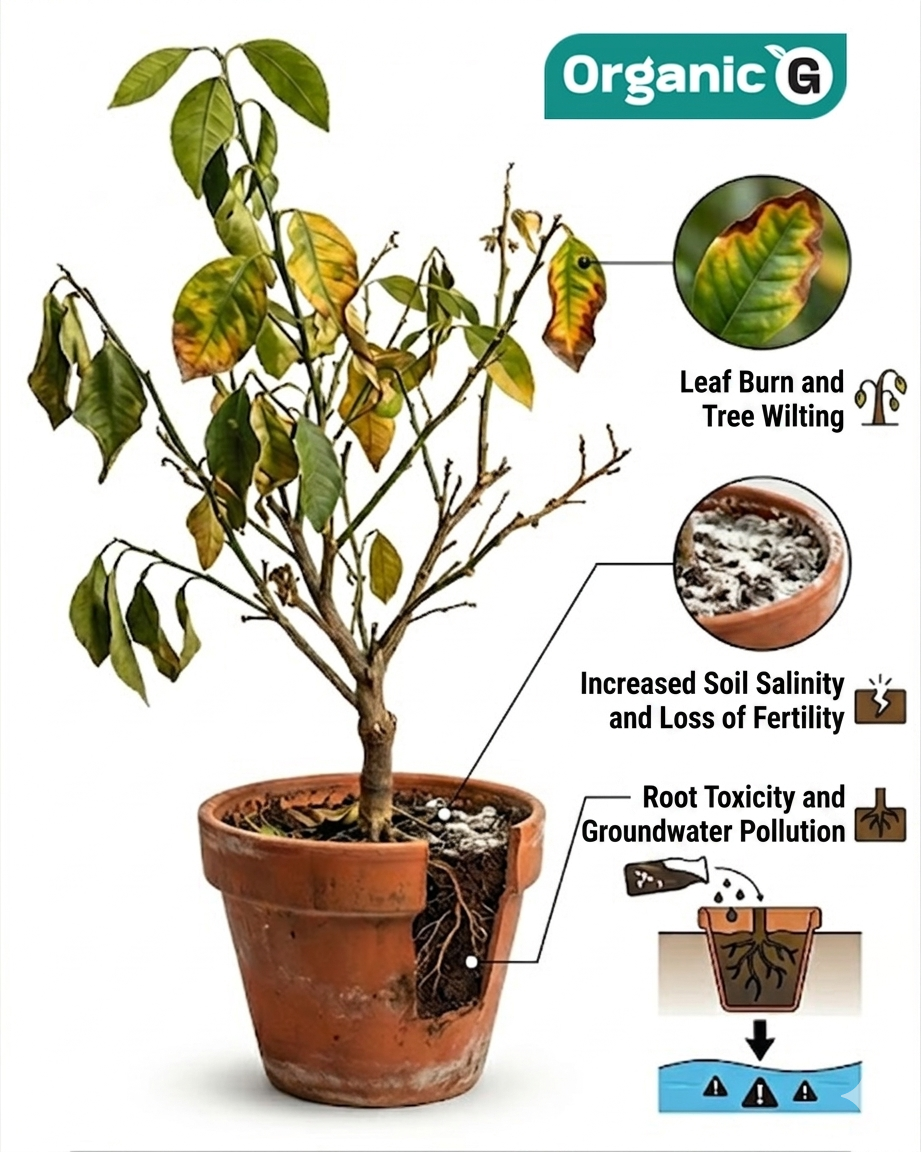
Fertilization management is a key factor in determining the productivity and quality of fruit orchards. However, a common misconception persists that increasing chemical fertilizer inputs automatically leads to higher yields. In reality, research and agricultural experience show that exceeding the optimal fertilization threshold can have negative consequences on plants, soil, and the environment.
1. Direct Effects on Tree Health
Excessive use of chemical fertilizers increases soil salinity, leading to:
- Osmotic stress that limits water uptake
- Physiological drought and leaf burn symptoms
Excess nitrogen also causes:
- Excessive vegetative growth
- Reduced flowering and fruiting
- Lower fruit quality and storage ability
2. Soil Degradation
Overuse of chemical fertilizers results in:
- Reduced beneficial microbial activity
- Impaired organic matter decomposition
- Soil structure deterioration and compaction
3. Nutrient Imbalance
Excess of one nutrient may inhibit the uptake of others (nutrient antagonism), for example:
- High phosphorus levels reducing zinc and iron availability
4. Environmental Impacts
- Nitrate leaching into groundwater
- Water contamination
- Increased greenhouse gas emissions
5. Increased Pest Susceptibility
Over-fertilized plants produce soft tissues that:
- Attract pests
- Increase fungal diseases
How to Maintain Balance?
- Regular soil and leaf analysis
- Apply fertilizers based on actual needs
- Integrate organic fertilizers
- Adopt precision agriculture practices
Conclusion
Excessive chemical fertilization does not guarantee better yields. Balanced nutrient management is essential for sustainable agriculture and high-quality production.