
Introduction
Tuta absoluta is considered one of the most destructive insect pests affecting tomato production worldwide. It can cause severe economic losses, reaching up to total crop failure if not properly managed. Since its spread from its native region in South America, this pest has become a major challenge in agricultural systems, particularly in warm regions and greenhouse production.
Taxonomy and Identification
Tuta absoluta belongs to the order Lepidoptera and the family Gelechiidae. The adult is a small moth, measuring approximately 5–7 mm in length, with a wingspan of 8–10 mm. It is typically grayish-brown with dark spots. The larval stage is responsible for the economic damage, as it feeds داخل plant tissues and creates characteristic tunnels.
Life Cycle
Tuta absoluta undergoes four main developmental stages: egg, larva, pupa, and adult. Eggs are laid individually on leaves, stems, or fruits and hatch within 4–7 days depending on temperature. The larval stage consists of four instars and lasts approximately 10–15 days, during which larvae feed داخل plant tissues, causing significant damage. Pupation occurs in the soil, on the plant surface, or within tunnels, and lasts 7–15 days. The complete life cycle is typically completed within 20–30 days under optimal conditions, allowing multiple generations per year.
Symptoms and Damage
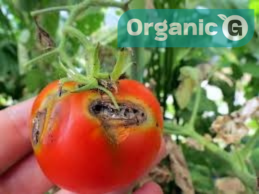
The primary symptoms of infestation include the formation of leaf mines, which reduce photosynthetic capacity and lead to leaf drying. Larvae may also attack stems, causing wilting or death of apical shoots, particularly in young plants. On fruits, small dark entry holes are observed, followed by internal feeding that leads to fruit rot and loss of market value.
Host Plants
Tomato is the primary host of Tuta absoluta. However, it can also infest other solanaceous crops such as potato, eggplant, pepper, and tobacco. In addition, wild plants such as Solanum nigrum and Datura serve as reservoirs, contributing to the persistence and spread of the pest.
Environmental Factors
The pest is active within a temperature range of 15–35°C, with optimal development occurring between 25–30°C. Relative humidity has a less significant effect compared to temperature. The presence of host plants is essential for the survival and reproduction of the insect.
Integrated Pest Management (IPM)
Effective control of Tuta absoluta relies on the implementation of integrated pest management strategies:
Cultural Control
This includes the use of healthy, pest-free seedlings, removal of crop residues, elimination of host weeds, and the application of crop rotation to reduce infestation sources.
Monitoring
Pheromone traps are widely used to monitor pest populations and detect early infestations, allowing timely intervention.
Biological Control
Biological control involves the use of natural enemies such as predators (e.g., Nesidiocoris tenuis) and parasitoids (e.g., Trichogramma spp.). Additionally, biopesticides such as Bacillus thuringiensis and Beauveria bassiana are effective, particularly against early larval stages.
Pheromone-Based Control
This includes mass trapping and mating disruption techniques, especially effective in greenhouse conditions to reduce reproduction rates.
Chemical Control
Chemical control should be used only when necessary. It is most effective when targeting larvae before they enter plant tissues. Common active ingredients include Chlorantraniliprole, Spinosad, Indoxacarb, and Methoxyfenozide. Rotation of insecticides is essential to prevent resistance development.
Greenhouse Management
In greenhouse production systems, additional measures are required, including the installation of insect-proof nets, the use of pheromone traps, the release of biological control agents, and proper sealing of openings to prevent pest entry.
Conclusion
Tuta absoluta represents a serious threat to tomato production. However, effective management is achievable through an integrated approach combining prevention, monitoring, biological control, and selective chemical interventions. Early detection and timely action are critical factors in minimizing damage and ensuring sustainable crop production.