
Introduction
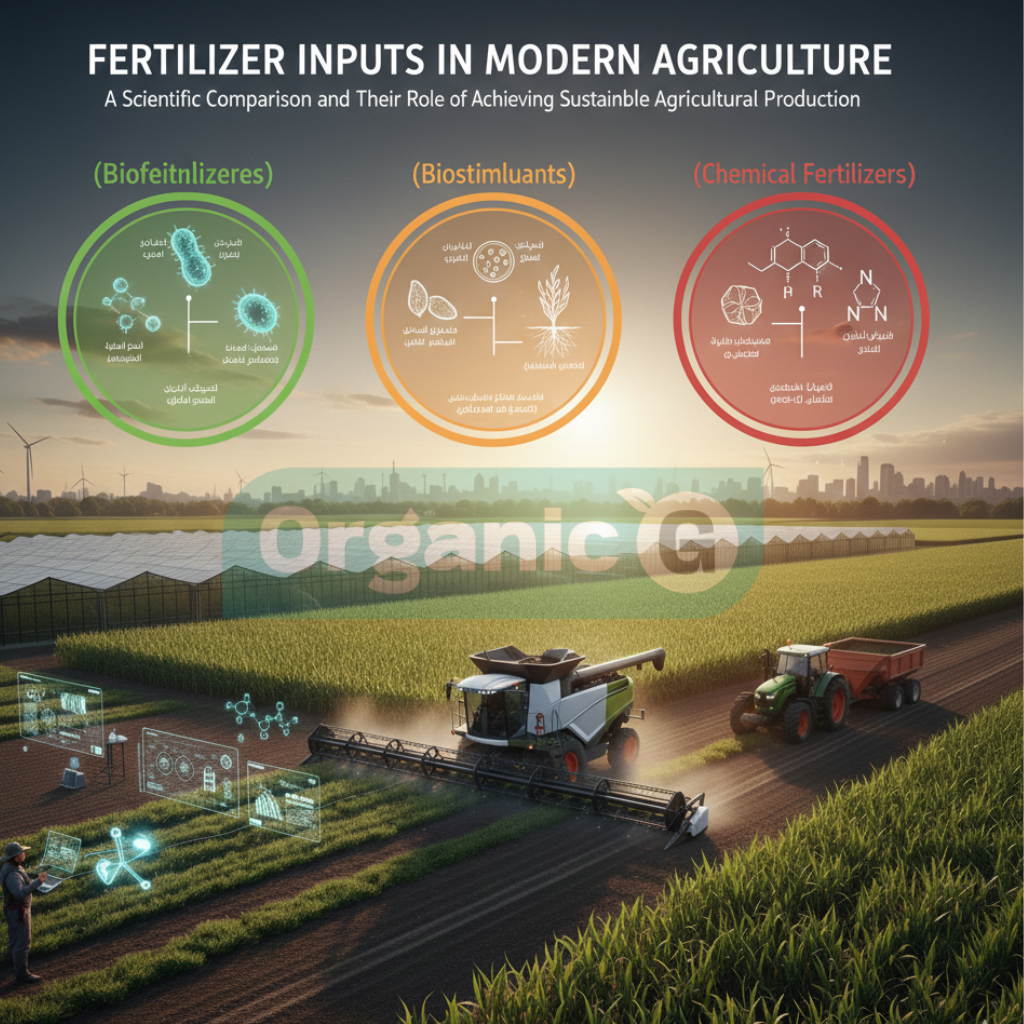
With the increasing environmental challenges and growing pressure on natural resources, sustainable agriculture has become a strategic necessity to ensure food security and preserve ecosystems. The proper selection of fertilizer inputs is one of the fundamental pillars in achieving this goal, due to their direct role in improving soil fertility, increasing crop productivity, and reducing the environmental impact of agricultural activities. Fertilizer inputs used in modern agriculture are generally classified into three main categories: biofertilizers, biostimulants, and chemical fertilizers, each differing in function and mode of action within the agricultural system.
First: Biofertilizers
Biofertilizers are products containing beneficial living microorganisms that enhance soil fertility through natural mechanisms such as atmospheric nitrogen fixation, solubilization of unavailable phosphorus, and improving nutrient availability to plants. This type of fertilizer contributes to sustainable plant growth over the long term.
Biofertilizers are characterized by their ability to stimulate microbial activity in the soil and improve its biological structure, which positively affects soil health and sustainability. They are environmentally friendly and help reduce dependence on chemical fertilizers, making them an essential component of sustainable agricultural systems.
Common examples of biofertilizers include:
Rhizobium, Azotobacter, and Mycorrhiza.
Second: Biostimulants
Biostimulants are natural or synthetic substances that do not directly supply nutrients but instead stimulate physiological processes within the plant. These substances enhance nutrient uptake efficiency, activate metabolic processes, and improve plant tolerance to various environmental stresses such as drought, salinity, and high temperatures.
Biostimulants play a supportive role in improving fertilizer use efficiency, enhancing vegetative and root growth, and increasing both yield and crop quality. Therefore, they are considered effective tools in modern agriculture focused on efficiency and sustainability.
Common examples include:
Seaweed extracts, humic acids, and amino acids.
Third: Chemical Fertilizers
Chemical fertilizers are industrially manufactured sources that provide essential plant nutrients directly and rapidly, particularly nitrogen, phosphorus, and potassium. They are widely used to achieve quick plant growth responses and increased agricultural production, especially in intensive farming systems.
Despite their high effectiveness, improper or excessive use of chemical fertilizers can lead to soil fertility degradation, disruption of soil biological balance, and negative environmental impacts such as groundwater and surface water pollution. Therefore, their application requires careful and integrated management to minimize adverse effects.
Examples include:
Urea, Diammonium Phosphate (DAP), and compound NPK fertilizers.
Key Differences Between Fertilizer Input Types
Biofertilizers focus on enhancing biological activity and microbial life in the soil, thereby improving natural soil fertility. Biostimulants aim to enhance plant physiological efficiency and increase tolerance to environmental stresses. In contrast, chemical fertilizers supply essential nutrients directly and rapidly to promote immediate plant growth.
Understanding these differences is essential for implementing integrated fertilization programs that balance high productivity with environmental sustainability.
The Future of Sustainable Agriculture
Recent studies indicate that reliance on a single type of fertilizer input does not achieve the desired level of agricultural sustainability. The future of sustainable agriculture depends on adopting an Integrated Nutrient Management (INM) approach, which is based on the strategic combination of biofertilizers, biostimulants, and chemical fertilizers. This approach contributes to increased agricultural productivity, improved soil fertility, and reduced environmental impact, ensuring the long-term sustainability of agricultural resources.